
Suspiria: Fantasies of Femininity and the Problem of Sexual Difference
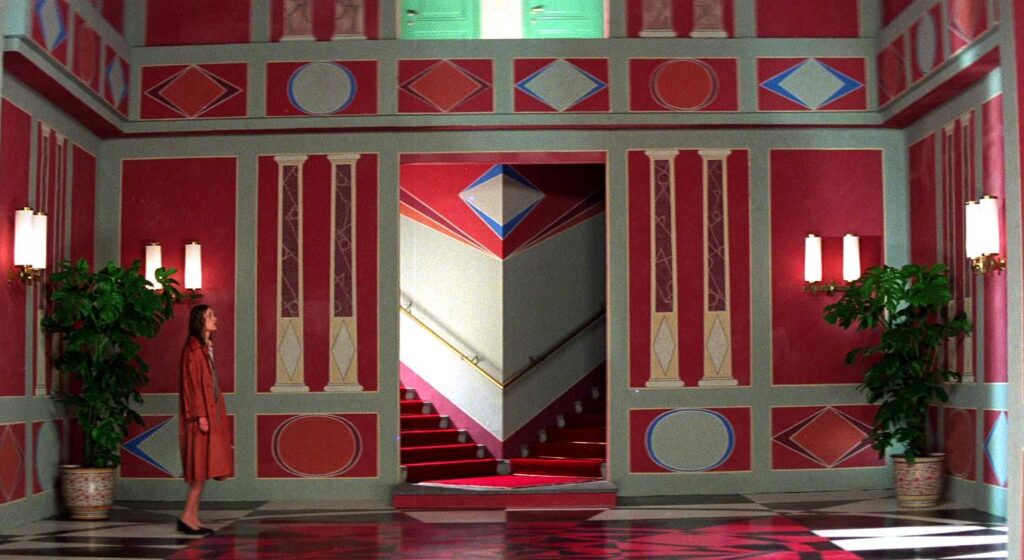
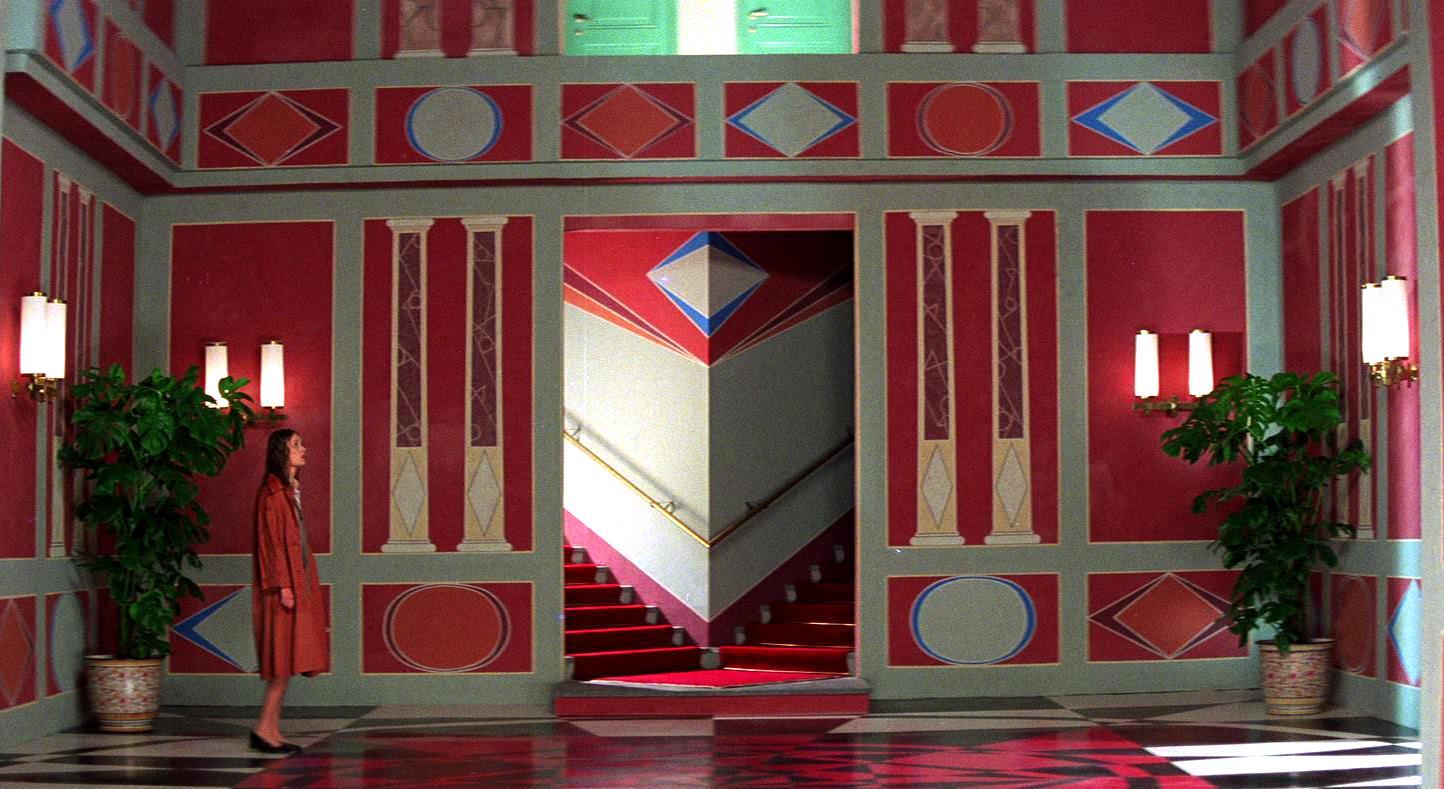
Suspiria (1977), directed by Dario Argento, presents a thrilling horror film set in a fantastical and visually beautiful world. The film plays with themes of femininity, transition, and fear, while telling an intergenerational story of witches and death. The theme of femininity is central to the film’s narrative, yet is also imperative to constructing aspects of the film form and creating gender. In her essay, The Technology of Gender, Teresa De Lauretis argues that, through social technologies like cinema, gender is constantly being constructed (3). This can be further applied to the film through Linda Williams’ essay “Film Bodies: Gender, Genre and Excess,” in which she applies psychoanalysis to the genres of horror, pornography, and melodrama. In the essay, Williams argues that the horror genre can be examined as a fantasy of gender and that, through this fantasy, it seeks to pose the problem of and then solves the originary problem of sexual difference (10). For this paper, I will be examining the scene in which Sara has fled the school and is staying with a friend before becoming the first victim of our mysterious killer. Using the film form, Mise-en-Scene, cinematography, editing, and sound, I will answer the question of how the film constructs fantasies of femininity, and thus how it solves, if at all, the problem of sexual difference.
Psychoanalysis provides the tools of fantasies to understand both sexuality and gender. Jean Laplanche and J. B. Pontalis provides an understanding of Fantasy in their 1968 essay “Fantasy and the Origins of Sexuality,” which Williams uses in her argument of the horror genre creating fantasies of gender. Williams uses Leplanche and Pontalis to understand fantasy as a non-narrative setting for desire, rooted in a real event and manipulated and controlled by the imagination (10). Fantasy becomes a place where the subject can explore and negotiate desire and identity, such as sexuality and gender. Suspiria creates a fantasy in which femininity is produced through sensation, atmosphere, and visual excess. The film is able to establish this fantasy firstly through its Mise-en-Scene.
Lighting is fundamental to film construction. It is integral to the camera’s ability to capture an image, directing the audience’s attention, and creating atmosphere within sets. Vibrant and polychromatic lighting is used throughout the film. The chosen scene begins washing both Sara and her friend in a deep yet vibrant blue light. As Sara moves into the bathroom, the light becomes warm, highlighting the fragile pink wallpaper. The outside of the window, further into the scene, is lit with blue, pink, purple, orange, and red lights, a color scheme that carries on into Sara’s death scene. Using Leplanche and Pontalis’s understanding of fantasy as rooted in reality yet manipulated by imagination into a space for expression and desire, the exaggerated lighting manipulates reality and creates a dream-like visual appearance. Sara becomes engulfed in the blue light. Her face and body become saturated with the color, dissolving the barrier between her body and the surrounding environment. Her body and thus her femininity are not in opposition to the space but a part of it. The construction of femininity in this case becomes no longer a distinct category but an immersive aesthetic condition. The language of the film, through lighting, is not of sexual difference but of a visual fantasy in which difference can not become stabilized.
Within the scene, sound design continues the immersion of the fantasy beyond the visual aspects. This is captured greatly by the film’s score. As Sara is drying off and discussing her explosion from school with her friend, the score remains inaudible. As she closes the door on her friend after the window flies open, we hear whispers and a disembodied feminine voice wailing. As the anticipation builds, the strange trilling score expands to fill the auditory space. In Williams’s discussions of the melodrama genre, she mentions “lapses of realism by excesses of spectacle.” (3) The score in this scene becomes excessive, dominating the audio scape of the film aside from the characters’ reactions and screams. We become hyper-aware of the music, building anticipation, and are removed from realism by its excess and placed into a fantasy realm. Beyond the instrumental music, the whispers of human vocalization, no discernible words, and the female wails create a sense of desire. There is a desire on the audience’s part to understand what is being communicated to us through the vocalization and in the scene, in relation to the killer’s appearance, to see who or what she is so afraid of. A desire to have the knowledge that the character seems to have or not have of the impending danger. Williams argues that when it comes to time in relation to fantasy and desire, in some cases, desire is not resolved but sustained, circulating without a clear subject or object (11). Our desire to fully understand and make sense of the vocalization, paired with the constant drone of the cyclical instrumental sounds, is never fully met but dragged out as we witness Sara die. Our desire becomes diffused and unsatisfied, constructing femininity as immersive and sensory.
Williams’ essay is in conversation with an earlier essay by Laura Mulvey, “Visual Pleasure and Narrative Cinema,” in which she uses psychoanalysis to understand feminist film theory, specifically when it comes to looking. In the essay, Mulvey introduces us to three looks: the character, the camera, and the audience (843). When watching narrative cinema, the goal of the filmmaker is to make the audience forget about the look of the camera and look only through the character. As Sara calms herself in the bathroom, we get a seventeen-second shot from outside the window. The camera stays static for the first ten seconds, framing Sara in the window, then, with almost agonizing slowness, the camera begins to push in on her. The length of the shot, the static, and the slowness of the movement make the viewer hyper aware of the camera. Through the camera, we are watching Sara, the thing outside that she is most afraid of. Through this cinematography, we as the viewers become the oppositional force. In her essay, Williams argues that in the horror genre, the viewer “oscillates between identification” (6). Williams is talking specifically about the arch of the female character, from passive victim to active savior, but in the case of Suspiria and the use of the camera’s look, the viewer begins to oscillate between the identification and immersion with the feminine fantasy inside the window and the oppositional force of the camera outside the window. The camera’s look remains unattached to a source of identification and thus ungendered; it floats through space and time, directing our attention. In this way, it remains a part of the anti-realism of the fantasy, and while oppositional to the feminine in the window, its lack of manifestation makes the manifestation of sexual difference unstable.
In Suspiria, the construction of femininity emerges not through opposition, but through immersion within a sensory fantasy structured by film form. The excess of its lighting, the disembodied and overwhelming sound, and the destabilizing cinematography produce a world in which bodies, space, and perception collapse into one another. This aligns with Leplanche and Pontalis’s argument that fantasy is a nonlinear or narrative space in which desire is active and never fully resolved. Williams argues that the horror genre seeks to pose the problem of sexual difference and to resolve it. This resolution in the scene is withheld. The use of color and lighting dissolves the boundary between body and environment, its sound design produces desire without object or closure, and its cinematography disrupts the stability of the gaze itself. Even when the viewer is positioned as an oppositional force, that position remains unanchored and ungendered, preventing the formation of a clear binary between subject and object. As a result, sexual difference never fully stabilizes as a problem to be solved. Instead, it resists the very framework through which such a problem could emerge, replacing it with an immersive fantasy in which femininity is not defined against masculinity, but exists as a totalizing sensory condition.
Works Cited
De Lauretis, Teresa. “The Technology of Gender.” Technologies of Gender, Indiana University Press, 1987, pp. 1-30.
Jean, Leplanche, and J. B. Pontalis. “Fantasy and the Origins of Sexuality.” The International Journal of Psychoanalysis, Institute of Psychoanalysis, 1968, 49:1-18.
Mulvey, Laura. “Visual Pleasure in Narrative Cinema.” Film Theory and Criticism: Introductory Readings, edited by Leo Brandy and Marshall Cohen, New York: Oxford UP, 1999, pp. 833-44.
Suspiria. Directed by Dario Argento, Seda Spettacoli, 1977.
Williams, Linda. “Film Bodies: Gender, Genre and Excess.” Film Quarterly, University of California Press, 1991, pp. 2-13.